Apple May Increase iPhone 17 Prices
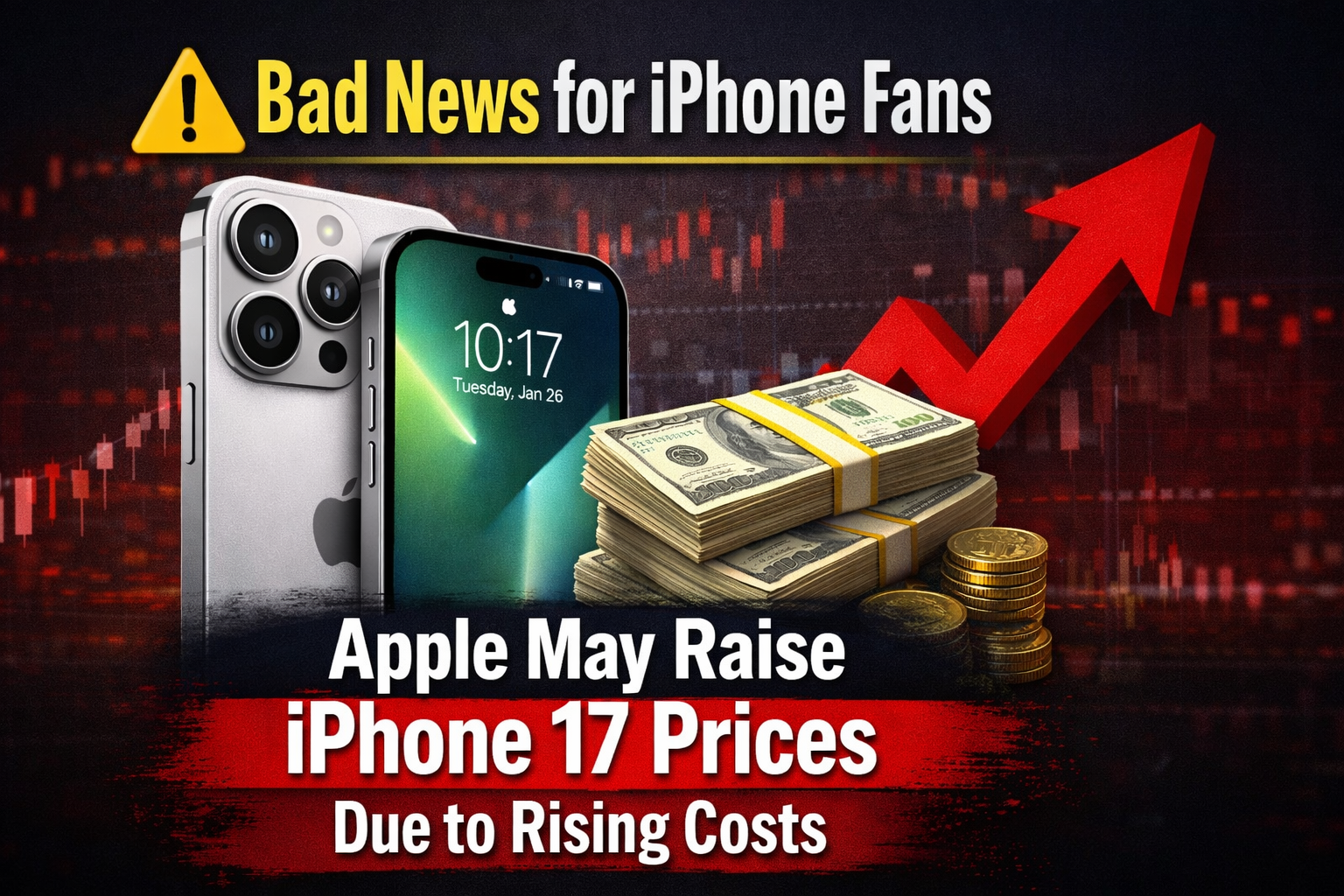
Apple could be preparing consumers for higher iPhone prices in 2026 as the company faces growing pressure from rising memory costs and ongoing supply challenges in the global semiconductor market. According to recent industry reports, the issue may begin affecting Apple as early as the iPhone 17 lineup, particularly the higher-end Pro models.
Global DRAM Shortage Is Driving Costs Higher
The main factor behind the potential price increase is the sharp rise in DRAM prices. DRAM is a critical component in smartphones, as it directly affects performance, multitasking, and AI-based features. Reports suggest that the price of 12GB LPDDR5X memory—expected to be used in the iPhone 17 Pro and Pro Max—has increased significantly.
Alo Read: Apple Can Now Easily Connect to Galaxy Buds and Watches
Previously, Apple was paying roughly $25 to $29 per unit for this memory. Today, that same memory reportedly costs close to $70 per unit. This represents an increase of more than 230%, making it one of the fastest-rising component costs in modern smartphone production.
Even for a company with Apple’s scale, such a large jump in component pricing creates serious pressure on profit margins.
Apple’s Usual Cost-Control Strategy Is Under Strain
Apple typically avoids sudden cost shocks by signing long-term supply contracts with major component manufacturers. These agreements allow the company to lock in prices years in advance and protect itself from short-term market volatility.
However, the current DRAM market appears to be an exception. Industry sources claim that Apple’s existing DRAM supply contracts with Samsung and SK Hynix are set to expire in January 2026.
Once these contracts end, Apple will be forced to renegotiate pricing at a time when memory prices remain elevated across the industry.
Under these conditions, it is unlikely that Apple will be able to secure DRAM at the same low prices it enjoyed in previous years.
Also Read: iPhone to Android Data Transfer Is Now Simple and Official
Memory Makers Are Shifting Focus to AI Products
The problem is being made worse by broader trends in the semiconductor industry. Major memory manufacturers such as SK Hynix and Micron are reportedly reducing production of LPDDR memory used in smartphones.
Instead, these companies are prioritizing High Bandwidth Memory (HBM), which offers higher profit margins and is in extremely high demand for AI accelerators, servers, and data centers. As AI investment continues to grow worldwide, smartphone memory has become a lower priority for suppliers.
This shift in production could limit Apple’s supply options and increase competition for available DRAM.
Apple May Depend More on Samsung in the Future
As supply tightens, Apple could become increasingly dependent on Samsung for DRAM in upcoming devices, including the rumored iPhone 18 series. While Samsung is one of the world’s largest memory producers, relying more heavily on a single supplier could weaken Apple’s negotiating position.
Reduced supplier competition often leads to higher prices, making it even harder for Apple to keep component costs under control.
Future iPhones Will Likely Require More Memory
At the same time, Apple is planning major performance upgrades for future iPhones. The iPhone 18 lineup is rumored to adopt six-channel LPDDR5X memory, a move designed to improve memory bandwidth and support more advanced AI features.
While this upgrade would deliver faster performance and better on-device AI processing, it would also increase the total amount of DRAM required per device. More memory channels mean higher costs, further adding to Apple’s financial burden.
Also Read: Your Next iPhone Will Rely More on Samsung Memory as RAM Prices Surge
Higher iPhone Prices May Be Hard to Avoid
For now, Apple remains in a relatively strong position thanks to existing contracts and its ability to absorb some cost increases. However, reports suggest the company is already exploring strategies to deal with shrinking cost buffers.
If DRAM prices remain near current levels through 2026, Apple may eventually have no choice but to pass some of these increased costs on to consumers. This could result in higher prices for the iPhone 17 lineup or future models, especially the Pro variants.
With memory becoming more expensive and next-generation iPhones demanding more advanced hardware, sustained price pressure appears increasingly unavoidable.
Frequently Asked Questions (FAQs)
1. Why could Apple raise iPhone 17 prices in 2026?
Apple may raise iPhone 17 prices because DRAM memory costs have increased sharply worldwide. The price of LPDDR5X RAM used in Pro models has risen by more than 200%, making it difficult for Apple to maintain profit margins.
2. Which iPhone 17 models are most likely to become more expensive?
The iPhone 17 Pro and iPhone 17 Pro Max are most likely to see price increases. These models are expected to include 12GB LPDDR5X memory, which is significantly more expensive than before.
3. What is causing the global DRAM memory shortage?
The shortage is mainly due to memory manufacturers shifting production toward High Bandwidth Memory (HBM) for AI servers and data centers. This reduces the supply of smartphone-grade memory.
4. When will Apple’s current memory supply contracts end?
Reports suggest Apple’s existing DRAM supply contracts with Samsung and SK Hynix are expected to expire in January 2026. After that, Apple may face higher memory prices.
5. Will future iPhones like the iPhone 18 cost even more?
There is a strong possibility. The iPhone 18 is rumored to use more advanced memory technology, which would increase production costs and could lead to higher retail prices.